

Commentary
Rym Momtaz, ed.
{
  "authors": [
    "Rym Momtaz"
  ],
  "type": "commentary",
  "blog": "Strategic Europe",
  "centerAffiliationAll": "",
  "centers": [
    "Carnegie Endowment for International Peace",
    "Carnegie Europe"
  ],
  "englishNewsletterAll": "",
  "nonEnglishNewsletterAll": "",
  "primaryCenter": "Carnegie Europe",
  "programAffiliation": "",
  "regions": [
    "Europe",
    "Ukraine",
    "Russia"
  ],
  "topics": [
    "EU",
    "Foreign Policy"
  ]
}
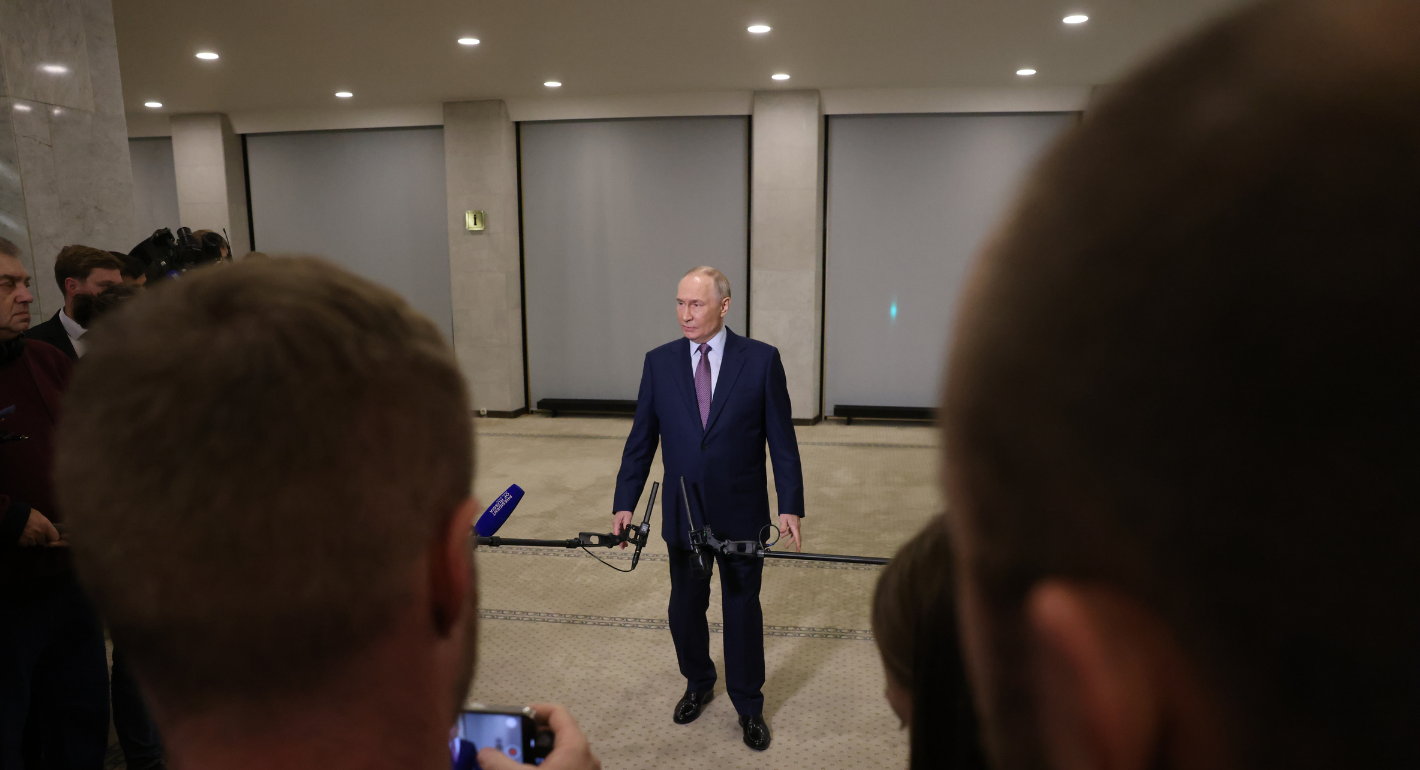
Source: Getty
The EU had to compromise to adopt a twenty-first sanctions package against Russia, exposing growing cracks in the union’s resolve. Is this latest, weaker round worth it to keep pressure on Moscow?
Diamond-Brown Senior Fellow for Economic Sanctions, Standards, and Strategy, International Institute for Strategic Studies
If the choice is between a diluted sanctions package and no sanctions package at all, then additional measures are, of course, preferable. Even watered-down sanctions can contribute to constraining Russia’s economy and narrowing its room for maneuver. But the large number of sanctions rounds should not be mistaken for effectiveness. The proliferation of packages reflects how difficult it has become for the EU to agree on tougher measures that carry costs for the union’s economy but are necessary for Europe’s long-term economic security.
The latest sanctions package illustrates this tension. At a time when Russia’s economy is at its most vulnerable, narrow interests prevailed over the need to apply stronger and more timely pressure. This is not surprising. The central weakness of Western sanctions policy remains the absence of a clear endgame where measures are used as calibrated leverage to shape outcomes. With that clearer endgame, the EU could have designed its latest measures with greater speed, scope, and strategic intent—to exacerbate existing tensions within Russia. In this context, it is unsurprising that Ukraine has increasingly resorted to so-called kinetic sanctions against Russia’s energy infrastructure, which have proved effective in disrupting a core source of the country’s revenue.
Head of International Advocacy, The Anti-Corruption Foundation (FBK)
The shortcomings of the EU’s sanctions policy are an extension of its strengths.
What is frequently characterized as Brussels’s indecisiveness in fact ensures the consistency of EU policy. The necessity of adhering to complex procedures to align member states’ positions slows the process and produces significant concessions, as with liquified natural gas transportation or the omission of Russian First Deputy Prime Minister Denis Manturov from the sanctions list. Yet, this same alignment of positions enables the union to remain more consistent and act in a far more systematic manner than the United States.
Sanctions pressure against the regime of Russia’s President Vladimir Putin constitutes a political process rather than a one-off measure. Within this process, the signaling of direction is an important element. The EU demonstrates its commitment to the progressive tightening of restrictions and once again identifies financial infrastructure and revenue sources as its priority targets. Given the complex internal coordination procedures within the bloc, the twenty-first sanctions package stands as direct evidence of the existence of political will.
The EU’s handling of Russian Minister of Sport Mikhail Degtyarev—removed from the lists in 2025 under pressure from Hungary and subsequently reinstated—illustrates its capacity to correct earlier mistakes.
Assistant Professor, Robert Schuman Center for Advanced Studies, European University Institute
Yes, the twenty-first sanctions package reconfirms that the EU is increasingly behaving as a geopolitical power pursuing multiple long-term strategic objectives simultaneously. Supporting Ukraine and defeating Russia remain strategic priorities. But the latter’s actions are not the sole organizing principle of European policy.
Internally, sanctions have become part of the broader EU integration project. Negotiations over successive packages have strengthened union-level monitoring and enforcement while increasing mutual oversight and accountability among member states. The bloc will also meet its main energy security objective: scaling up infrastructure to entirely replace Russian gas by the end of 2026. But restrictions on commercial private actors that continue transporting Russian gas to third countries remain an unresolved task that cannot be postponed indefinitely.
Externally, sanctions negotiations also reinforce the EU's identity as a rules-based power that upholds legal certainty in the international order, including commercial law. Rather than terminating contracts unilaterally, Brussels has established legal frameworks to phase them out. The union also shows the importance it places on the interests of international partners, while maintaining its objective to support their own decoupling from Russia. It has thus exempted Russian liquified natural gas supply to Japan and South Korea from sanctions until 2028.
Director, European Values Center for Security Policy
Yes, any EU sanctions on Russia are good. This is a country that is waging the largest aggressive war in Europe since 1945, therefore any strategic pain European states can put on Moscow is justified and needed. Yet, national leaders are still not using the three most effective punitive instruments: seizing frozen Russian assets in Europe, physically blocking all Russian shadow fleet vessels around the Baltic Sea, and initiating escalating sanctions on China for its enormous support of Russian war crimes in Ukraine—and therefore in Europe.
EU sanctions on Russia since 2022 have been wide-ranging, yet so far, member states have decided not to deal a strategically decisive blow to the stability of the Russian dictatorship by adopting the three aforementioned measures. Therefore, while they clearly want to support Ukraine to continue bravely fighting for its defense, they refuse to really push for the strategic Russian defeat.
Even if Ukraine wins or loses in the end, history will surely judge most EU national leaders harshly—they have, so far, wasted the opportunity to significantly assist Kyiv in defending Europe and disabling the Russian threat to the continent for at least a generation.
Professor, Polish Academy of Sciences and Part-time Professor, European University Institute
Yes. In the current geopolitical context, watered-down EU sanctions are still better than no sanctions at all.
The exemptions granted to Greece, as well as the carve-outs sought by Bulgaria, France, Germany, Italy, and Portugal undoubtedly reduce the measures’ impact . Yet without compromise, the EU might have failed to adopt another package altogether. Preserving unity and keeping sanctions in place sends a stronger political signal than allowing disagreements to block collective action.
Despite growing pressure and fatigue, European governments with different economic interests, energy dependencies, and domestic constraints have continued to impose costs on Russia for its aggression against Ukraine.
At the same time, the exemptions reveal a fundamental feature of sanctions as a policy instrument: They are inherently double-edged. These measures are designed to impose costs on the target state, but they can also create economic and political costs for those implementing them. The challenge for the EU is therefore not only to increase pressure on Russia, but also to sustain the domestic consensus needed to maintain that pressure over time. With 2027 shaping up to be a major electoral year across Europe, sustaining this level of political unity will become increasingly difficult.
Nonresident Senior Fellow, Hudson Institute
Sanctions are as much about causing pain for the adversary as they are about sending a political message. The political message of disunity among member states about the latest EU sanction package could outweigh the damage they will do to Russian interests.
And Western disunity is what Moscow thrives on. The more there is, the better the prospects are for Russia. And the bigger the incentive becomes for it to continue the war.
So, Brussels might have decided to skip the exercise to avoid sending a damaging message of disunity.
On the other hand, not continuing to adapt sanctions to changing circumstances would, in itself, also send a message. The first nine sanctions packages were agreed in 2022. In the three years that followed, there were always at least three packages.
The moment the EU stops following this rhythm, it sends a message even worse than disunity and watered-down sanctions. It would show Russia that there is so little political will left to confront it that even trying to put up a new sanctions package is not worth the effort. Better to try and fail on the most ambitious parts than not to try.
Visiting Scholar, Carnegie Europe
The answer is yes.
Furthermore, when it comes to gas deliveries, we are not in fact talking about watering down the existing sanctions—rather, it is recalibration of a new ban supposed to take effect at the end of the year.
The EU—meaning European societies as well as the bulk of political elites—have been horrified by Russia’s war against Ukraine, and are ready to suffer significant pain to punish the perpetrator. However, if sanctions start to look like lots of hardship for little gain and no end in sight, then there is a risk of fraying consensus.
Thus, the bloc’s sanctions will always remain a complicated balancing act. It is in Europe’s interest to reduce Russia’s war-fighting capacity, but it needs to do so in ways that are sustainable for its democracies and that do not deal a fatal blow to the continent’s future global competitiveness. Hence, it makes sense for the EU to prioritize smart sanctions over wide-ranging ones: They should focus on the areas where the union has lots of leverage and relatively little exposure. But that has surely occurred to policymakers in Brussels, too.
Subscribe to Strategic Europe, delivered every Tuesday and Thursday!

Editor in Chief, Strategic Europe
Rym Momtaz is the editor in chief of Carnegie Europe’s blog Strategic Europe. A multiple Emmy award-winning journalist-turned-analyst, she specializes in Europe and the Middle East and the interplay between those two spaces.
Recent Work
Rym Momtaz, ed.
Rym Momtaz
Carnegie does not take institutional positions on public policy issues; the views represented herein are those of the author(s) and do not necessarily reflect the views of Carnegie, its staff, or its trustees.
Trump is distracted and Ukraine wants Europe to step up. The continent’s leaders must find their voice and assert it in talks with Russia.

Alissa de Carbonnel

Mounting economic strain and battlefield losses will not necessarily make the Kremlin less dangerous. They could instead push Moscow toward a more aggressive hybrid campaign designed to test NATO’s Eastern flank, exploit allied hesitation, and fracture European resolve.

Maksym Beznosiuk
Over the past ten years, NATO has held almost as many summits as it did during the entirety of the Cold War. Are they still useful, or is it time to stop holding annual meetings?
Rym Momtaz, ed.
Nearly a year and a half after Europeans leaned into sucking up to Trump, the strategy has produced some benefits when it comes to Ukraine.
Rym Momtaz
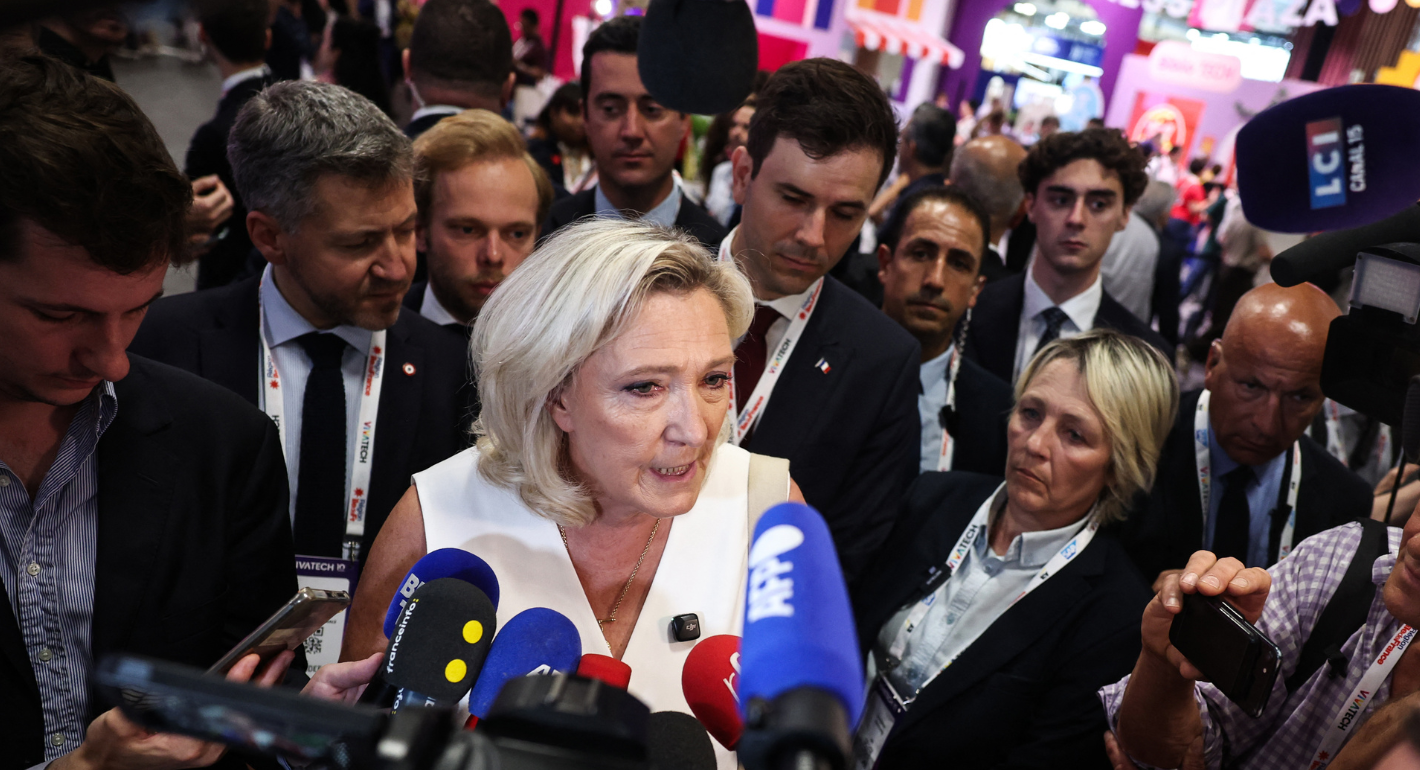
Far-right leader Marine Le Pen can—and will—run in France’s next presidential election. What does the outcome of her appeal against a 2025 embezzlement conviction mean for the country’s political future?

Catherine Fieschi